Key Takeaways
- Weather conditions directly affect food safety, service speed, equipment requirements, and staffing for wedding catering in Singapore.
- Venue type determines menu feasibility, service style, logistics complexity, and contingency planning.
- Outdoor and semi-outdoor weddings require stricter operational controls than fully indoor venues.
- Effective wedding catering in Singapore depends on aligning menu design with both environmental exposure and venue infrastructure.
Introduction
Weather and venue type are two of the most underestimated variables in wedding planning, yet they have a direct and measurable impact on catering outcomes. These factors, particularly in catering in the city-state, influence everything from menu selection to food safety compliance and service execution. Couples who treat catering decisions as independent from venue and weather considerations often encounter operational issues on the actual day. Knowing how these elements interact allows for more realistic planning and smoother delivery for wedding catering in Singapore.
Weather Considerations in Wedding Catering
Heat and Humidity
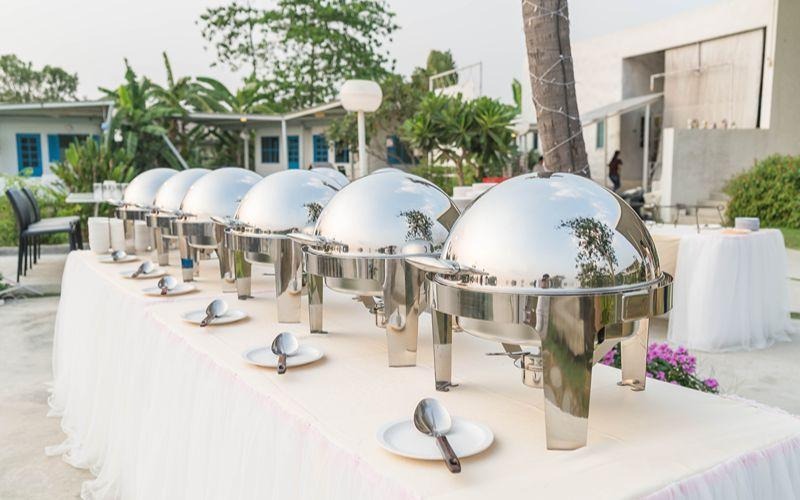
The region’s consistently high temperatures and humidity levels place immediate constraints on menu planning. Dishes that rely on temperature stability, such as cream-based items, raw seafood, or delicate desserts, deteriorate faster in warm environments. This situation often calls for favouring cooked-to-order items, heat-stable appetisers, and plated service over prolonged buffet displays. Additional equipment, such as chafing dishes, insulated food carriers, and backup refrigeration, becomes essential, increasing logistical requirements and costs.
Rain and Unpredictable Weather
Sudden rain showers are common and can disrupt outdoor service flow. This situation requires advance planning for sheltered service areas, covered buffet lines, and protected food preparation zones. Rain also affects guest movement, which can lead to congestion at food stations if layouts are not adjusted. Caterers typically build weather buffers into timelines, but last-minute changes still strain manpower and coordination if contingency plans are not agreed upon early.
Wind and Environmental Exposure
Wind presents another challenge for open-air venues. It affects food presentation, increases contamination risk, and complicates the service of lighter items such as canapés. Professional wedding catering often mitigates this through heavier serving ware, covered displays, and modified menu formats that prioritise stability over visual complexity.
Venue Type Considerations in Wedding Catering
Indoor Hotel and Banquet Venues
Hotels and dedicated banquet halls provide controlled environments with built-in kitchens, climate control, and established service infrastructure. These venues allow for more complex menus, precise timing, and consistent food quality. However, they may impose strict operational rules, including approved vendor lists, fixed service formats, and limited flexibility in menu customisation. Couples often trade creative freedom for execution reliability in these settings.
Outdoor and Garden Venues
Outdoor venues offer visual appeal but demand higher operational discipline. Most lack permanent kitchen facilities, requiring off-site preparation and on-site finishing. This situation increases dependence on mobile equipment, power supply, and transport coordination. Wedding catering for outdoor venues typically involves simplified menus, fewer live stations, and tighter service windows to reduce exposure risks. Venue access, terrain, and distance from loading areas also affect manpower allocation and setup time.
Semi-Outdoor and Private Venues
Semi-outdoor venues such as rooftop spaces or private estates sit between indoor and outdoor extremes. While they may provide partial shelter and utilities, limitations remain. Caterers must assess ventilation, drainage, and space constraints before confirming menu scope. These venues, when used in catering in Singapore, require customised operational plans rather than standard packages, which can affect pricing and lead times.
Aligning Weather and Venue With Catering Decisions
The most effective wedding catering begins with aligning menu design, service style, and staffing plans with both weather exposure and venue capabilities. Early site inspections, realistic guest flow modelling, and clear contingency agreements reduce last-minute compromises. Couples who involve caterers early in venue discussions gain clearer visibility on what is operationally viable, rather than what appears attractive on paper.
Conclusion
Weather and venue type are not secondary considerations in catering decisions; they are central operational factors. Wedding catering in Singapore performs best when menus, logistics, and service formats are selected based on environmental suitability rather than aesthetic preference alone. Couples who plan with these constraints in mind reduce risk and achieve more consistent outcomes on their wedding day.
Contact Elsie’s Kitchen and let us assess menu feasibility, service format, and contingency planning before your big day.